
|
NON PSICOLOGICA
Sito di contenuti sul funzionamentodella mente umana |
|

|
Apprehension The Mechanics of Tonic Arousal and the Synthesis of Complex Sentiments (By Alberto Bonizzato – Behavioral Coach)
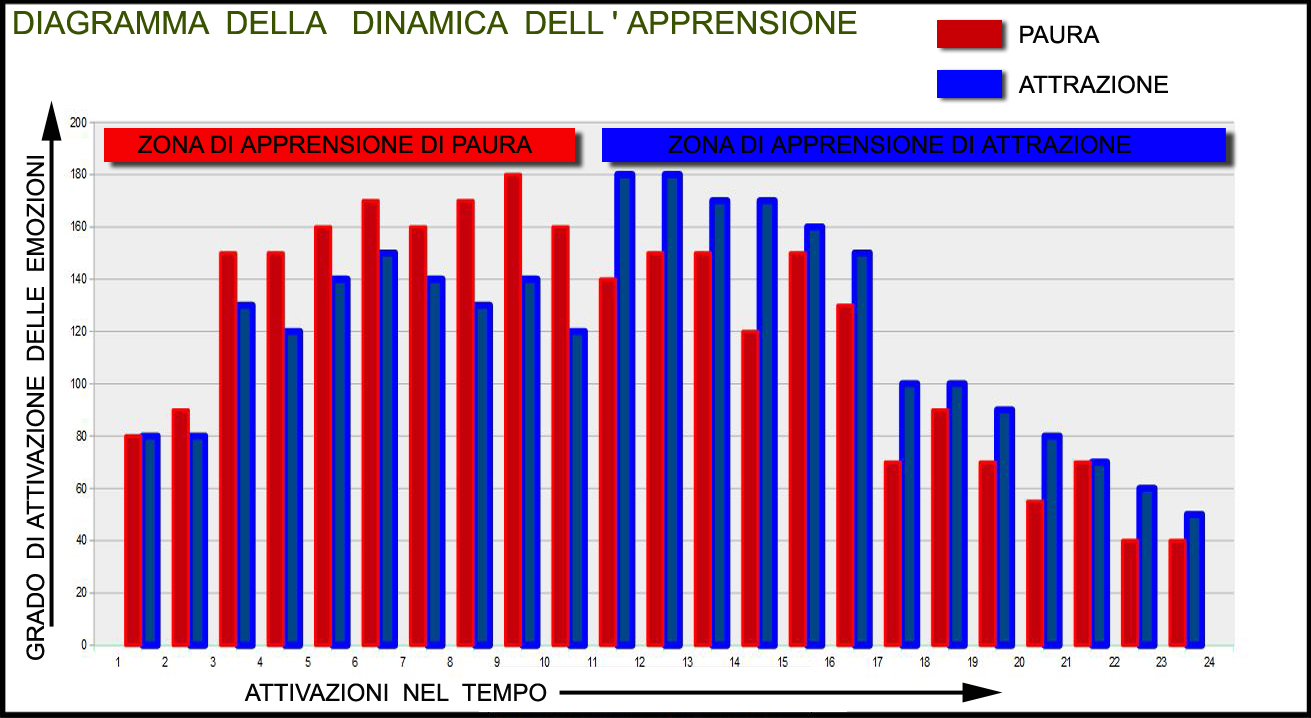
Across the various sections of this website, the term apprehension (apprensione) has been routinely deployed to describe specific states of behavioral and relational distortion. In this chapter, it is essential to de-structure and isolate the deep meaning of this construct, analyzing it within its exact configuration as a functional matrix and generator of complex sentiments. In ordinary language, the word apprehension intuitively evokes a state of generalized psychophysical tension. While this interpretation correctly captures the superficial phenomenological effect, the deeper mechanics of the phenomenon require us to clarify with precision exactly which systemic and biological components are at play. The Nature of Limbic Computation: From Instantaneous Arousal to Tonic States To comprehend the genesis of apprehension, one must refer to the baseline model of primary emotional activation. As illustrated within the neurobiological diagrams of POMM, the limbic system responds to environmental and projective stimuli by altering two fundamental vector parameters millisecond by millisecond: intensity and wave dominance (rigidly polarized along the axis of Fear or Evolutionary Curiosity/Attraction). This real-time fluctuation constitutes the baseline Arousal of the organism. However, the cognitive mind does not possess a microscopic or point-like monitoring architecture; conscious awareness is simply not equipped to register the micro-variations of limbic arousal as they fluctuate millisecond by millisecond. Conscious perception operates instead via a process of analog, approximate, and summary synthesis.
[Micro-Limbic Variations / Millisec.] ──> [Kinetic Integration (Extended Time)] ──> [APPREHENSION / TONIC STATE] (Fear / Attraction Fluctuations) (Arousal Saturation Loop) (Stabilized Excitation)
When a high discharge of primary emotional activation sustains itself across an extended window of time (on the order of minutes or hours), the central nervous system saturates its capacity to restore baseline homeostasis. Consequently, the sensation of alarm or activation sheds its short-term "reactive response" character and solidifies, converting into a state of tonic excitation. It is precisely this macroscopic stabilization of autonomic arousal that POMM operationalizes as apprehension. Once apprehension establishes its foothold within the system, the neocortex intervenes ex-post to ascribe a cognitive value to this lingering excitation. In an entirely automatic and non-conscious fashion, the organism selects and deploys the reactive behaviors judged adequate to manage that energetic load, drawing exclusively from the range of internal operational models and learned behaviors crystallized within its specific transgenerational and familial experience. The Polarization of Apprehension and its Evolution into Sentiment Apprehension is not a monolithic block; rather, it represents a potential energy that becomes oriented and colored according to the dominant emotional drive that initially overloaded the system. As demonstrated in the chromatic breakdown model of the mind, this energetic load is encoded by the cognitive mind and projected onto objective reality, giving birth to the constellation of sentiments: 1. Negative-Dominant Apprehension (The Matrix of Fear) When a prolonged state of excitation is continuously fueled by the circuitry of fear or projective threat detection, apprehension polarizes into the negative spectrum. The conscious mind, forced to explain the persistence of this somatic alarm, focuses the energy by anchoring it to specific external objects, situations, or individuals. This gives rise to negative sentiments: performance anxiety, hatred, lingering resentment, phobias, structural mistrust, or competitive jealousy. Within this framework, a negative sentiment is merely the ideological rationalization of a negative apprehension that the system is mechanically unable to decommission. 2. Positive-Dominant Apprehension (The Matrix of Attraction) Conversely, when tonic excitation is sustained by the circuitry of evolutionary curiosity, environmental exploration, and biological attraction, apprehension polarizes into the positive spectrum. The energetic saturation of the system is cognitively interpreted through the channels of validation, relief, and gratification. This produces the spectrum of expansive sentiments: enthusiasm, joy, idealized infatuation, stereotypic happiness, or seductive drives. Here too, we are observing a mental synthesis: the individual does not perceive the isolated electrons of limbic activation, but experiences the macro-gestalt effect of the positive sentiment.
┌─── [FEAR Dominance] ──────────> [NEGATIVE SENTIMENTS] │ (Anxiety, Hatred, Victimhood, Phobia) [APPREHENSION / TONIC STATE] ──┤ │ └─── [ATTRACTION Dominance] ───> [POSITIVE SENTIMENTS] (Joy, Enthusiasm, Happiness, Seduction) Conclusion: The Projective Filter of Human Affect The extraordinary complexity of human behavior resides precisely within this autocatalytic loop. The continuous variation of primary emotional states (fear and attraction) intertwines inextricably with the archives of structural memory and the projective reality built by the individual. Apprehension operates as the raw fuel of the psychophysical engine. The neocortical mind, completely incapable of tolerating an activation devoid of meaning, acts as a movie projector: it takes the load of unrefined apprehension present within the limbic system, links it to an image or a socially introjected maxim learned within the primary entourage, and dictates the final identification of that precise, holistic state of sentiment that the person declares to experience. To understand the mechanics of apprehension means to cease treating human sentiments as mystical, abstract, or spiritual entities. They reveal themselves for what they truly are from a functional standpoint: pseudo-logical architectures and projective configurations engineered by the mind to give a definitive shape and direction to the organism's flows of arousal.
|
Eng Panel Menu
|
|
|
|
Eng Panel Menu
|
Operational Scenarios: The Projective Mechanics in Action
To clarify this mechanics empirically, let us isolate three operational sequences demonstrating how latent apprehension determines the perception of objective reality:
Scenario A: Positive-Dominant Projection (The Attraction Circuit) Suppose a subject is currently experiencing an unrefined state of positive apprehension (attraction-dominance) due to a non-conscious internal activation. If they happen to encounter a friend on the street, the neocortex instantly bonds this pre-existing state of energetic excitation to the presence of the friend. The mind projectively overlays its internal attraction onto the individual; consequently, the resulting cognitive synthesis is interpreted as the sentiment of joy and happiness at encountering the friend.
Scenario B: Negative-Dominant Projection (The Fear Circuit) Conversely, suppose the same subject is experiencing a state of negative apprehension (fear-dominance), driven by a non-conscious internal alarm. The projective mechanism scans the immediate environment and targets the fact that the subject has parked their vehicle in a restricted zone (an action they could have easily avoided).
The mind instantly couples this memory with the anticipatory calculation of receiving a traffic citation. Regardless of whether the fine is actually issued, this cognitive association breeds a negative sentiment of hostility and anger directed toward local law enforcement.
[Latent Negative Apprehension] + [Memory: Illegal Parking] ──> [Anticipatory Calculation of Fine] │ ▼ [SENTIMENT OF HOSTILITY TOWARD POLICE]
If the subject later returns to the vehicle and discovers that no citation was issued, the underlying apprehension undergoes an immediate reversal of wave dominance. The alarm subsides, and the projective filter shifts, allowing the subject to synthesize a sudden positive sentiment of relief.
Scenario C: Transgenerational Automatisms and the Victim Posture Consider a final sequence: the subject is lying in bed during the semi-lucid state of early morning waking. Their limbic system non-consciously activates a primary state of negative apprehension rooted in fear. Searching for a contextual anchor, the neocortex isolates the memory of an impending, routine tax payment.
The internal projection translates this somatic alarm into a cluster of complex sentiments: fear, irritation, victimhood, and rage regarding the forced extraction of capital by the state. As a result, the subject develops a deep, ideological resentment and aversion toward government institutions.
In objective reality, the subject has always known that taxes must be paid, and the upcoming transaction represents neither an extraordinary nor an unforeseen event. The subject has mechanically generated their own temporary victim posture through an entirely automated, non-conscious loop.
|
|
|
|
|

|
Sito di divulgazione e pubblicazione culturale
I contenuti pubblicati in questo sito sono di proprietà intellettuale di Alberto Bonizzato In collaborazione con: Laura De Biasi e D.ssa Maria Russo Contatto: alberto@non-psicologica.org |
|