
|
NON PSICOLOGICA
Sito di contenuti sul funzionamentodella mente umana |
|

Panel Menu
|
Genealogy of the Emotional Model: The Filogenetica Architecture of Survival (By Alberto Bonizzato – Behavioral Coach)
The Stratification of Limbic Arousal, Canonic Babbling vs. Behavioral Babbling, and the Deconstruction of Joint Attention
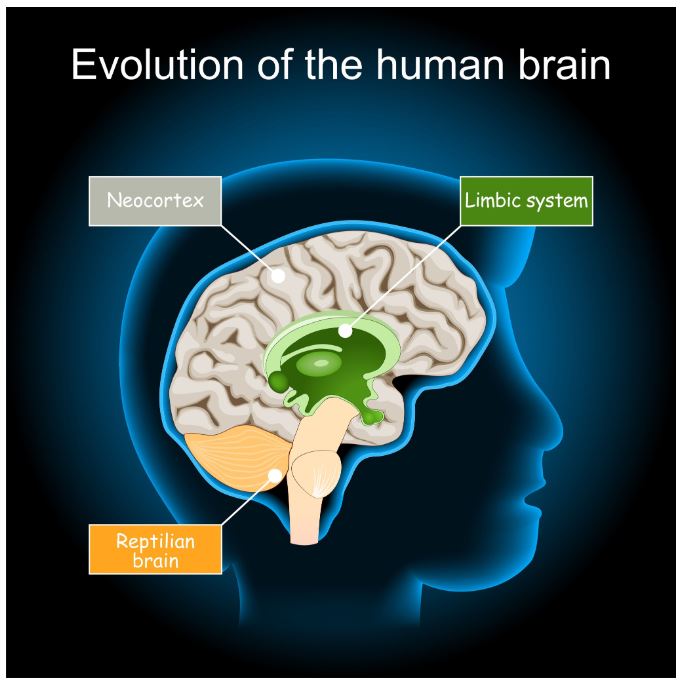
To comprehend the genealogy of the Emotional Model, it is scientifically imperative to abandon the anthropocentric perspective that views the human mind as an isolated entity or an abstraction that suddenly emerged alongside verbal language. Our cerebral architecture and its derived functions are the terminal outcome of an evolutionary process spanning hundreds of millions of years, initiated long before the emergence of hominids or the baseline definition of modern mammals. [FILOGENETICA HISTORICAL LAYER] (Gangli della Base / Reptilian Engine) │ ▼ [LIMBIC SYSTEM CORE ARCHITECTURE] (Binary Piston: Evolutionary Curiosity vs. Fear) │ ┌───────────────────────────┴───────────────────────────┐ ▼ ▼ [THE ACCELERATOR VECTOR] [THE BRAKE VECTOR] (Evolutionary Curiosity / Drive) (Primary Fear / Regulator) │ │ └───────────────────────────┬───────────────────────────┘ ▼ [THE SYSTEMIC NEURAL HARDWARE] (Arousal Modulation / Preventive Mapping) │ ▼ [ONTOGENETICA PROGRAMMING BLOCK] (Early Infancy Infusion / Environmental Matrix)
1. The Stratification of Biological Time The roots of our somatosensory processing sink deep into primitive nervous structures, originally developed within aquatic organisms and early reptiles. Millions of years before the genus Homo made its appearance, natural selection had already perfected the primary survival protocols bound to Evolutionary Curiosity (the kinetic attraction toward exploration and environmental mapping) and Fear (operating either as an adaptive regulator of attraction or as an immediate defense activator). To precisely map the interaction of these two antithetical activations, we can deploy the mechanical metaphor of an automobile’s accelerator and brake. They do not coincide with moralistic concepts of "positive" or "negative"; they execute necessary, practical functions engineered to manage the vehicle. These two vectors operate continuously as an antagonistic pair, regulating sensations, thoughts, and behaviors from the central command and activation station: the Limbic System. The joint execution of these two powerful primary emotions is called Arousal (from the English term for activation). These primary functions were never replaced by human evolution; they were strictly stratified. The human brain preserves the structural commands of species that lived eras ago. When we define the Emotional Model, we are referencing a matrix that executes upon a filogeneticamente ancient hardware, designed to respond by anticipating direct environmental stimuli long before collective culture manufactured concepts such as "society," "morals," or "ethics." 2. From Reptilian Responses to Mammalian Sociality The baseline of emotional reactivity consolidated within the basal ganglia (frequently designated as the reptilian brain) and subsequently within the Limbic System. These subcortical areas, responsible for the governance of arousal, fight-or-flight protocols, and homeostatic regulation, were fully functional millions of years before early mammals began to develop maternal care and complex social structures. The Emotional Model that the child absorbs today within the familial entourage simply programs these archaic structures. The modern individual, despite existing within a hyper-technological setting, responds to relational stimuli by deploying neural circuits that evolved to guarantee survival within a wild environment. The mechanics of the Emotional Model are the contemporary execution of primordial biological algorithms. The widespread error of orthodox psychology is believing that the neocortex—the most recent part of our brain—can easily govern or suppress these deep-seated dynamisms. In reality, the computational speed of limbic emotional responses is infinitely superior to that of rational thought. The genealogy of the Emotional Model demonstrates that the human being is never a cultural tabula rasa, but an organism executing operations upon a pre-existing framework, stress-tested by millions of years of biological success. Comprehending this heritage means to permanently cease seeking moral explanations for one's own alarm states, analyzing them instead as the automated activations of an extraordinarily ancient and coherent biological machine. From the first milliseconds of life, the infant activates an automated mechanism of data acquisition. This process does not serve to "understand" the world intellectually, but to build a survival map based on direct associations between external phenomena and internal somatic responses. 3. The Mechanism of Neutral Associations and Matrix Formation Contrary to idealist convictions, the young infant possesses no baseline concept of "good" or "bad." When registering an experience, the system applies zero moral value to the trace. To the infant, an adult's behavior is processed simply as raw empirical data to be learned, tested, and reproduced. If an environmental stimulus (a gesture, a vocal timbre, a physical touch) repeats with statistical frequency, the brain logs it as "habitual." The child does not evaluate whether that action is ethically just; the system registers exclusively the level of alarm (arousal) or quietude (homeostasis) that the scenario produces within the interacting adult and within themselves. Only years later will these raw memories be drammatizzate—meaning heavily loaded by the neocortex with a narrative meaning of suffering or joy. Initially, the apparatus is purely reactive and reproductive. This does not mean that inhibitions or severe exaggerations are not installed, but that the entire framework operates in a state of absolute absence of moral discernment. These repeated registrations, complete with the variables of real-world situations, solidify into a matrix: a rigid grid of possibilities mapping a specific experiential domain.
Experiential CategorySystemic DefinitionMechanical OutputConsueto (The Habitual)Behaviors experienced systematically within the primary core.Agibili (Executable). These actions are mapped as achievable and safe for the model.Inefficiente (The Inefficient)Behaviors that failed to extract resources or produced unsustainable alarm.Da Evitare (To Avoid). Mapped as blocked due to lack of internal skills or high risk.Sconosciuto (The Unknown)Scenarios never encountered within the early familial entourage.Non-Concepibili (Inconceivable). Structurally impossible to think or execute. The familial environment effectively dictates the boundaries of the child's reality. If the primary relation is anchored upon frequent physical contact, the child will decode the world with a distinct somatic-kinetic propensity. If it is anchored upon the spoken word, the system will fine-tune its radar to acoustic-cognitive signals. This system of trial and error establishes precisely which emotional responses are functionally effective to extract attention or care from the parents, mapping exactly what behaviors the caregivers expect and validate, or reject and penalize.
4. The Development of Communicative Factors in Early Infancy The acquisition of language and the structural engineering of the emotional model are not parallel, casual paths; they are interdependent bio-mechanical processes rooted within the same neurological architecture. The analysis of pre-linguistic communication reveals how the mechanics of the mind deploy the exact same tools—environmental feedback, mirror neurons, and the limbic system—to encode both vocal phonemes and emotional behaviors. A1. The Pre-Symbolic Phase: The Driver of the Need From birth, the neonate possesses a limited behavioral repertoire (such as endogenous smiling or crying). At this stage, crying is not a structured language encoded with cognitive meanings, but a highly potent biological tool engineered to summon attention and satisfy primary needs. ・ Linguistic Parallelism: Crying represents raw acoustic material—a high-frequency alarm signal with an impact frequency designed to force the surrounding environment to formulate an immediate response. ・ Emotional Parallelism: This coordinate marks the placement of the first seed of the Primary Emotional Model. The somatic state bound to the neonate's early communicative signaling is gradually enriched over time by the feedback of parental behavior. Based on the caregivers' reactions, the infant learns specific habits that write themselves directly into the functional coding of the communication file. The Mechanical Deficit of the "Snowplow Parent" If the adult’s response is constantly directed toward silencing the symptom (the cry) rather than deciphering and satisfying the underlying biological need, the child learns that the emission of a signal of distress or suffering is the single effective lever to extract control and force the environment to tune into them. The "social cry," which emerges around the third week of life, is the first signal triggered by non-physiological causes: the infant does not seek nutrition, but relational validation and interaction, mapping the baseline boundaries of their own relational efficacy. A2. From Babbling to the Behavioral Schema: The Exercise of Feedback Between 4 and 7 months of age, the infant enters the stage of vocal play and canonic babbling (lallazione). This exercise does not exist to produce isolated sounds, but to experimentally discover the causal relationship between the muscular movements of the phono-articulatory tract and the emitted acoustic signal, which is tightly bound to the habitual feedback of the entourage. When an environmental feedback deviates from statistical habit, it stands as an attractive variable, manufacturing a micro-need for cognitive and emotional processing. ・ Linguistic Parallelism: Babbling functions as a literal neurophysiological and kinesthetic gymnasium. As the motor circuits and articulatory movements become automated and fluid, stable syllabic structures become easier to retrieve and execute in future words. ・ Emotional Parallelism: Symmetrically, the infant’s emotional reactions (grimaces, facial adjustments, gaze modulations) function as a form of "behavioral babbling." If the child experiences that a specific posture—such as defensive withdrawal, pouting, or systematic complaining—extracts a rigidly reassuring or hyper-protective response from the parents (the intervention of the "snowplow parent"), that exact behavioral configuration is associated with relational survival. It is automated within the system precisely like a canonized syllable. The mind does not consciously "choose" to suffer or to execute a dysfunctional posture; it simply repeats automatically the kinetic and emotional model it learned and archived as functional to maintain the bond with the caregiver.
A3. Joint Attention and the Projective Construction of Reality Around 9 to 12 months, deictic or performative gestures emerge, such as pointing, showing, or giving. This crucial transition marks the birth of Joint Attention, a triadic configuration wherein the adult and the child coordinate their gaze to focus simultaneously on a third element external to the dyad. ・ Mechanics of Pointing: When the infant points to an object in space, the maternal figure or primary caregiver typically responds by including the verbal denomination of the object within their speech (occurring statistically between 87% and 100% of cases). This relational automation constructs a stable neurological bridge between the kinetic action gesture (motor coordination) and the name of the object (cognitive extraction). ・ Emotional Mechanics: Within this exact interactive triangle (Self $\longrightarrow$ Other $\longrightarrow$ Object), the quality of the subject's future emotional independence is structured. If the caregiver does not limit themselves to naming the elements of the real world, but saturates the interaction with hyper-attention, anticipatory anxiety, or unjustified overprotection ("Watch out!", "Poor thing!", "It's dangerous!"), the child does not merely archive the cognitive notion and the name of the object. The system absorbs and internalizes the entire emotional coloration—the frame of threat with which to look at reality. Joint Attention thus mutates into the primary vehicle for the transmission of parental behavioral drivers: through the resonance of mirror neurons, the child learns to rigidly dread what the parent dreads, building a reflected identity structurally dependent on the adult's anxiety responses.
A4. The Structural Limit of the Word and the Automation of the Model Longitudinal studies demonstrate a sharp correlation in development: children who deploy a greater volume and variety of deictic gestures at 14 months develop a significantly broader linguistic vocabulary and a higher processing speed at 30 months. Adult communicative fluidity and richness depend directly upon the frequency and quality of these early exchanges. However, within the overarching architecture of the human mind, a structural paradox emerges: while verbal language evolves naturally toward abstract complexity, flexibility, and differentiation, the deep emotional model tends to regress and stabilize around rigid, repetitive liftoffs. The cognitive and emotional system rejects change not out of lazy psychological resistance, but due to a precise bio-mechanical impossibility: the mind cannot invent operational models that it has not previously learned. If the primary "emotional vocabulary" installed during the first years of life was structured entirely upon the pillars of protective dependency, submission, or negativity, the adult subject will find themselves completely stripped of the necessary functional tools. When confronted with conflicts, frustrations, or the complexities of social and professional life, the individual will inevitably attempt to solve problems by automatically reproducing the exact same "deictic gestures" of early infancy: the continuous extortion of help, the systematic delegation of responsibility to the outside, and the ritualized signaling of structural inability. This transpires because alternative behavioral models, written and consolidated within the neural circuits, are entirely missing.
5. Modern Complexity and Projective Distortion The human learning apparatus is biologically programmed to respond to simple, coherent environmental stimuli. In the contemporary world, however, the young individual is submerged within an immense mass of chaotic, conflicting information and incoherent reactions. This modern complexity produces a severe distortion of the emotional matrix, defining the projective platform with a sharp deviation from raw reality. The child's desires (which are natively minimal) are conditioned and artificially accelerated by parental models heavily influenced by predatory marketing and social ideologies of happiness bound to consumption. Because the child lacks internal criteria to evaluate their own baseline skills, the system can only execute a response to the stimuli it receives. If the parents are chronically apprehensive, the child registers the arousal as a constant signal bound to every element of reality, integrating apprehension into their baseline matrix.
6. The Principle of Coherence and Stability In adulthood, the Emotional Model operates as an absolute filtering lens. The machine constantly hunts for Coherence: ・ Coherence: Achieved when an ongoing phenomenal event closely matches a pre-existing learned experience. In this scenario, emotional arousal stabilizes, and the individual registers a state of control and calm. ・ Incoherence: Transpires when the environment presents a scenario never experienced before. Lacking a reference trace within memory, the Limbic System triggers high-arousal apprehension—an intense attentional state engineered to scan for danger and map the novelty. This mechanics explains why a vast number of individuals tend to compulsively repeat painful relational situations: they execute these loops because those tragic scenarios are "coherent" with their internal matrix. Even though they manufacture chronic suffering, they do not activate the terrifying alarm of the unknown.
7. Adaptation and Behavioral Change via ERG The Emotional Model is a system that is highly rigid in its architecture, yet extraordinarily adaptive: it can plastically transform reality specifically to avoid changing its internal programming. This inertia is explained by the massive volume of data it processed to construct itself—approximately twenty years of continuous early learning that cannot be updated or replaced overnight. The Limbic System, filtering all incoming sensory information, stands as the literal bottleneck of any revision, modification, or evolution one wishes to apply to the emotional dynamics of a person. If the baseline interpretation of the projective system is not modified, the experiences will remain un-updated, and the behavioral-kinetic automatisms will continue to fire. The evolution of the individual does not consist of attempting to rewrite or philosophically reinterpret the historical past; it consists of modifying the topology of interactions in the absolute present. By changing the current interpretation of the environment, we alter the signals we receive, forcing the Model to produce and process entirely new experiences. The identity of the person is never an immutable destiny, but the output of a system that can be re-oriented through the execution of Guided Real Experiences (ERG = Esperienze Reali Guidate) and the systematic acquisition of Emotional Independence.
|
Panel Menu
|
|
|
Panel Menu
|

|
Sito di divulgazione e pubblicazione culturale
I contenuti pubblicati in questo sito sono di proprietà intellettuale di Alberto Bonizzato In collaborazione con: Laura De Biasi e D.ssa Maria Russo Contatto: alberto@non-psicologica.org |
|